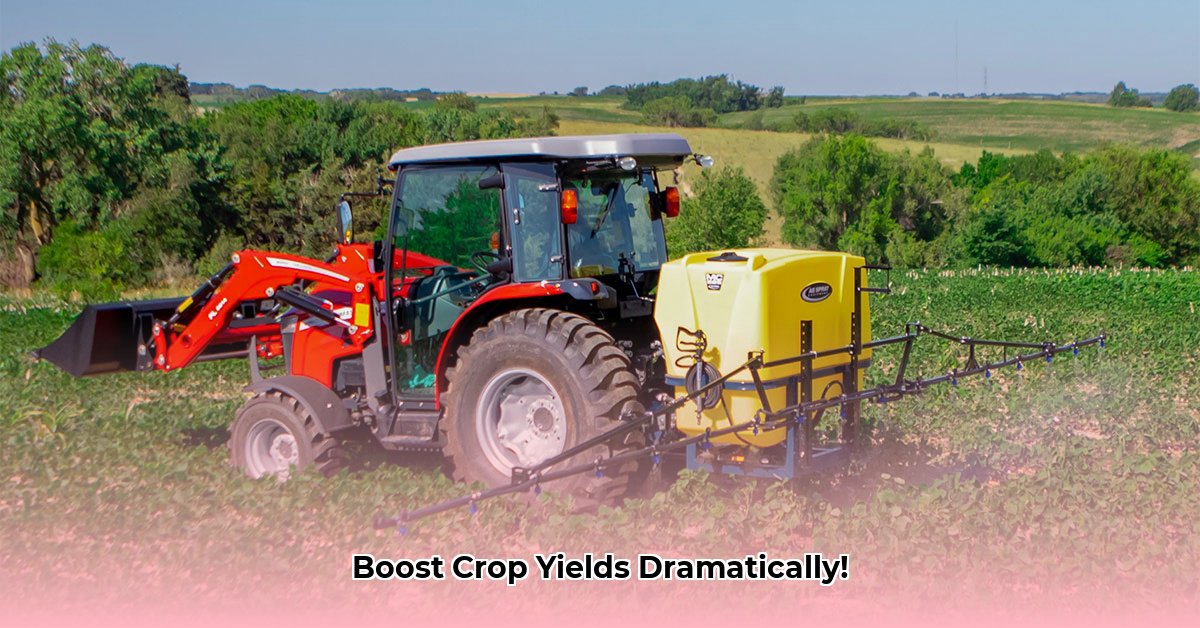
Efficient and sustainable spraying is paramount in modern agriculture. A tractor boom sprayer, when used correctly, significantly enhances crop yields while minimizing environmental impact. This guide provides a comprehensive approach to selecting, using, and maintaining your boom sprayer, enabling you to optimize your spraying operations. For information on electric fence wire, check out this helpful resource: electric fence wire.
Choosing the Right Boom Sprayer
Selecting the ideal boom sprayer depends on your farm's size, crop types, and budget. Several key features demand careful consideration.
Tank Capacity
Tank capacity directly impacts refill frequency. Smaller farms (under 50 acres) may find 50-100-gallon tanks sufficient, while larger operations (over 200 acres) may require 250-500+ gallon tanks for optimal efficiency. Isn't minimizing downtime a key factor in maximizing your yield?
Boom Width
Boom width influences coverage per pass. Wider booms (40+ feet) are advantageous for large fields, but maneuverability might be limited in smaller, more complex areas. Smaller farms (under 50 acres) will likely benefit from booms in the 15-25 foot range. Choosing the right boom width balances efficiency and practicality.
Nozzle Type
Nozzle type determines spray pattern and droplet size. Air induction nozzles, for instance, are effective in reducing drift, a critical factor for environmental protection and the prevention of spray damage to neighboring crops. Low-drift nozzles are particularly important for large farms and those near sensitive ecosystems. What nozzle type best minimizes drift while ensuring adequate coverage for your specific crops?
Pump Pressure
Pump pressure impacts spray coverage and drift. Higher pressure can improve coverage, especially in taller crops, but also increases drift potential. Finding the optimal balance requires careful consideration of your specific needs and environmental conditions.
| Feature | Small Farm (Under 50 acres) | Medium Farm (50-200 acres) | Large Farm (Over 200 acres) | Considerations |
|---|---|---|---|---|
| Tank Capacity | 50-100 gallons | 100-250 gallons | 250-500+ gallons | Refills, time constraints |
| Boom Width | 15-25 feet | 25-40 feet | 40+ feet | Field size, maneuverability |
| Nozzle Type | Standard, adjustable | Air induction, low-drift | Air induction, low-drift | Crop type, drift, regulations |
| Pump Pressure | Moderate | Moderate to High | High | Crop height, wind conditions |
Optimizing Spray Application
Uniform spray coverage is crucial for maximizing pesticide or fertilizer effectiveness and minimizing waste. Inconsistent application leads to under-treated areas, impacting yields and potentially necessitating further treatments.
Calibration: Regular calibration—measuring discharge over a known distance and adjusting settings—is essential for accurate application rates. Incorrect calibration leads to wasted resources or ineffective treatment. How frequently do you calibrate your sprayer to ensure optimal performance?
Nozzle Selection: Choose nozzles based on crop type, spray pattern requirements, and environmental considerations. Low-drift nozzles are preferred in windy conditions or near sensitive areas.
Weather Conditions: Avoid spraying on windy days; wind significantly impacts spray drift and can lead to uneven coverage. Optimal spraying conditions are characterized by calm winds and minimal air turbulence.
Overlapping Passes: Slightly overlap passes (approximately 25%) to ensure complete coverage and prevent gaps.
Integrating Precision Agriculture
Precision agriculture technologies significantly improve spraying efficiency and reduce chemical usage.
- GPS Guidance: Automated steering ensures straight, even passes, minimizing overlap and gaps, leading to more efficient chemical usage.
- Variable-Rate Application (VRA): Applies differing chemical amounts based on specific field needs, optimizing resource use and minimizing environmental impact. This targeted approach reduces unnecessary chemical application.
- Sensor-Based Monitoring: Real-time data on spray patterns provides immediate feedback, enabling adjustments for optimal performance.
Maintenance and Safety
Regular maintenance is vital for the longevity and performance of your boom sprayer.
- Cleaning: Thoroughly clean the sprayer after each use to prevent clogging and corrosion.
- Inspection: Regularly inspect for leaks, wear, and damage.
- Storage: Store the sprayer appropriately to protect it from the elements.
- PPE: Always wear appropriate Personal Protective Equipment (PPE), including gloves, eye protection, and a respirator, when handling pesticides and during spraying operations.
Always prioritize safety. Adhere strictly to the manufacturer's instructions and relevant safety regulations.
Regulatory Compliance
Strict adherence to local and national pesticide application regulations is mandatory. Understanding and complying with these regulations ensures responsible pesticide use and prevents potential penalties. These regulations cover storage, handling, disposal, and record-keeping.
"Efficient spraying is not just about cost savings; it’s about environmental stewardship and maximizing crop yields," says Dr. Emily Carter, Agricultural Engineer at the University of Illinois. "Precision agriculture tools offer tremendous potential for optimizing spray application and reducing the environmental footprint of farming."
Key Takeaways
- Matching sprayer capacity to tractor capabilities is essential for safety and efficiency.
- Nozzle selection directly affects application accuracy and drift reduction.
- Regular maintenance is paramount to sprayer longevity and efficient operation.
- Integrating GPS and variable-rate technology enhances precision application and reduces chemical use.
- Understanding and complying with local regulations is crucial for responsible pesticide use.